The Empty Space That Says Everything: How 'Ma' Makes Kumatori Yusuke's Work Impossible to Ignore
The first time a lot of American creatives encounter Kumatori Yusuke's work, their instinct is to call it "minimal." Clean. Stripped back. Maybe even sparse. And honestly? That reaction makes total sense from a Western design perspective, where emptiness is usually something you fill — a problem to solve, a gap to close.
But here's the thing: calling Kumatori's work "minimal" is a little like calling a haiku short. Technically accurate, completely missing the point.
What's actually happening in that work is something far more deliberate. It's a principle called ma (間), and it might be the single most important concept for understanding why Japanese creative output hits differently — and why Western audiences keep gravitating toward it even when they can't quite articulate why.
So What Actually Is 'Ma'?
Ma doesn't translate cleanly into English, which is part of why it gets flattened into "negative space" or "minimalism" so often. But those terms suggest absence — something missing. Ma is almost the opposite of that.
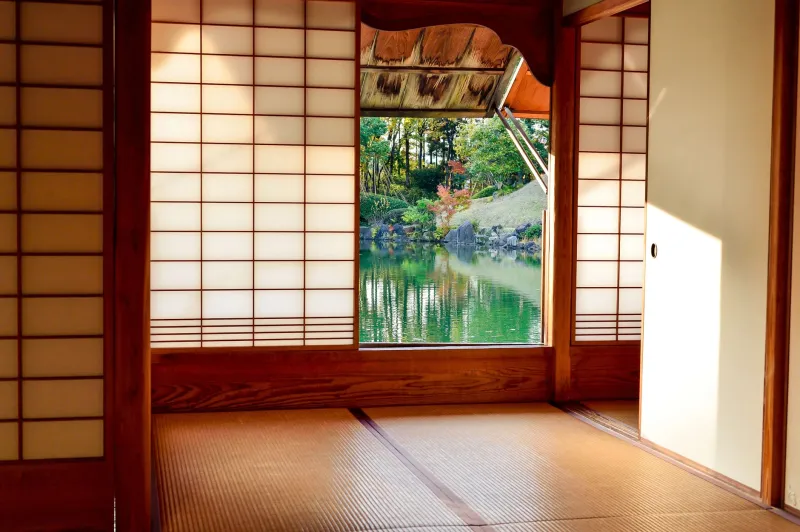
In Japanese aesthetics, ma refers to the intentional pause, gap, or interval between elements. It shows up in architecture, music, theater, visual art, even conversation. It's the beat of silence before a punchline. The breath between musical notes. The empty floor space in a room that makes you feel calm instead of cramped. It's not the absence of content — it's the presence of meaning through restraint.
The philosopher Arata Isozaki described it as "a pause pregnant with possibilities." That framing is key. The space isn't empty. It's loaded.
How This Shows Up in Kumatori's Work
When you look at Kumatori Yusuke's output across different formats — visual work, digital storytelling, cultural commentary — the principle of ma is threaded through all of it. Not as a stylistic choice that got locked in early, but as a genuine operating philosophy.
Take pacing. Where a lot of Western content creators stack information densely, trying to maximize engagement per second, Kumatori's work breathes. There are moments that just... sit. Visuals that don't explain themselves. Ideas that get introduced and then left alone long enough for the audience to actually feel them before the next thing arrives.
That rhythm isn't accidental, and it's not "slow" in the way that term sometimes gets used as a polite criticism. It's ma in action — using the interval as an active creative element rather than dead air to fill.
The same principle applies to visual composition. There's consistent use of open space that doesn't feel like the designer ran out of ideas. It feels like the space was put there to do work — to create tension, to direct attention, to give the eye somewhere to rest so it can appreciate what it lands on next.
Why American Audiences Are Responding (Even Without Knowing Why)
Here's something interesting happening in the US creative landscape right now: audiences are increasingly exhausted by maximalism. Social feeds are noisy. Ads are loud. Every surface is fighting for attention with more, more, more. The aesthetic arms race of the last decade has produced a kind of sensory fatigue that a lot of people feel but struggle to name.
Into that environment, work built around ma lands differently. It doesn't demand attention — it earns it. The restraint feels respectful of the audience's intelligence. The pauses feel like trust.
And American audiences are responding. You can see it in the explosion of interest in Japanese interior design, in the popularity of slower-paced Japanese media formats, in the way "wabi-sabi" became a lifestyle buzzword (however imperfectly understood). People are hungry for creative work that doesn't try to overwhelm them into engagement.
Kumatori's work sits squarely in that current. It offers breathing room in an era when breathing room feels genuinely rare.
The Lesson American Creatives Keep Almost Learning
A lot of US-based designers and content creators have tried to adopt ma as a tactic. You see it in the sudden embrace of white space in brand redesigns, in the "quiet luxury" aesthetic trend, in the minimalist web design wave that's been rolling through the industry. And some of it is genuinely good work.
But there's a difference between using emptiness as a trend and understanding it as a principle. The trend version of negative space is decoration. The ma version is communication.
The distinction matters because it determines whether the restraint holds up over time or whether it eventually gets filled back in when the trend moves on. Kumatori's work doesn't feel like it's waiting to be filled in. The space is doing something. Remove it and the work collapses.
For American creatives trying to learn from this, the practical takeaway isn't "use more white space." It's closer to: trust the interval. Believe that what you don't say can carry as much weight as what you do. Resist the urge to explain, to fill, to over-deliver. Give your audience enough room to bring something of themselves to the work.
That last part is actually central to how ma functions. The space isn't empty — it's an invitation. The audience completes it. And that act of completion creates a much deeper connection than passive consumption of a fully-explained thing ever could.
Why This Matters Beyond Aesthetics
It would be easy to treat ma as purely a visual or formal principle — something relevant to designers and not much else. But spend any time with Kumatori Yusuke's broader body of work and it becomes clear that ma operates at a conceptual level too.
The way ideas are framed. The topics that get left open-ended rather than resolved. The editorial choices about what to include and what to deliberately leave out. These aren't accidents or oversights. They're ma applied to meaning-making — using strategic incompleteness to keep the work alive in the audience's head long after the initial encounter.
That's the part that's hardest to teach and easiest to underestimate. A lot of creative work tries to be memorable by being loud or surprising or visually spectacular. Kumatori's work tends to be memorable because it leaves something unfinished in the best possible way — a thread you keep pulling on, a question that stays with you, a silence you keep returning to.
That's ma. And once you see it, you can't unsee it.
Kumatori Yusuke is a Japanese creative professional whose work explores the intersection of traditional Japanese aesthetics and contemporary global storytelling. More at kumatoriyusuke.com.