Against the Algorithm: How Japanese Creators Keep Winning Without Playing the Game

Photo: Midorenjar, CC BY-SA 4.0, via Wikimedia Commons
There's a particular kind of exhaustion that hits American content creators around month three of posting daily. The metrics look fine. The follower count is inching up. But something feels hollow — like you're feeding a machine that will never actually be full. You're not making work anymore. You're manufacturing outputs.
Japanese creatives, by and large, never fell for this trap. And the ones who are now breaking through globally — including folks like Kumatori Yusuke — are doing it on their own terms, at their own pace, with almost zero interest in what the trending tab says today.
The weird part? It's working better than almost anything else out there.
The Viral Playbook Is Showing Its Age
Let's be honest about what chasing virality actually looks like in practice. You reverse-engineer what performed well last week. You replicate the format, swap in your face, add a hook in the first two seconds. You post, you wait, you analyze. Then you do it again tomorrow.
That's not creative work. That's content farming with better lighting.
For a while, it worked well enough that people convinced themselves it was a strategy. But the cracks are showing. Audiences are getting better at smelling optimization. Gen Z especially has developed an almost supernatural ability to detect when something was made for them versus made at them. Engagement rates are dropping across the board even as follower counts climb. The algorithm keeps changing the rules faster than anyone can adapt.
And quietly, in the background, a completely different approach has been building cultural momentum for years.
What "Deliberate Slowness" Actually Looks Like
When you look at how Kumatori approaches putting work into the world, the first thing that stands out is the absence of urgency. There's no posting schedule optimized around platform peak hours. There's no frantic pivot every time a new content format emerges. The work drops when it's ready, and the framing around it is almost always about the thing itself rather than the performance of the thing.
This isn't laziness or indifference. It's a deeply intentional philosophy rooted in something Japanese creative culture has understood for a long time: that consistency of vision matters more than consistency of volume.
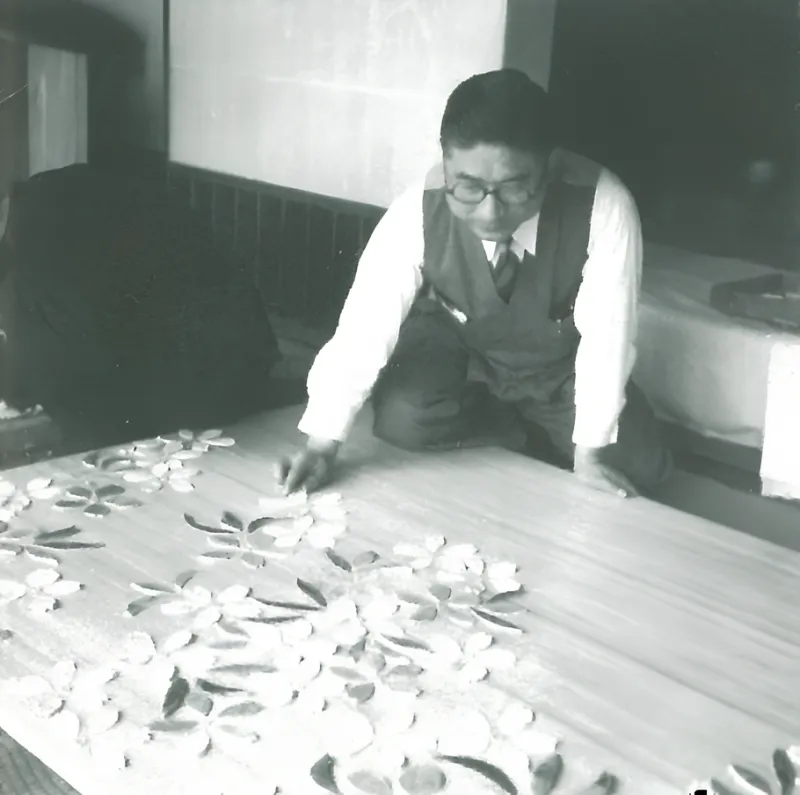
In Japan, there's a concept sometimes translated as shokunin kishitsu — a craftsperson's spirit. It's the idea that mastery isn't a destination but a continuous practice, and that the work itself is the point. You don't make things to go viral. You make things because making them well is its own form of integrity. The audience finds that, eventually. And when they do, they stay.
Why Authenticity Lands Differently Than Engagement Bait
Here's something the analytics dashboards don't capture well: the difference between someone who follows you and someone who cares about you.
American creators have gotten very good at the former. Hooks, thumbnails, calls to action — these are legitimate tools, and there's nothing wrong with understanding how they work. But they tend to attract people who are interested in content as a category, not in you specifically. The moment a better piece of content comes along, they're gone.
What Kumatori's approach builds — and what you see across a lot of Japanese creators who've found global audiences — is something closer to a genuine cultural community. People who follow the work because they trust the sensibility behind it. People who will wait months between releases because they know it'll be worth it. People who recommend the work to friends not because a sharing prompt told them to, but because it genuinely meant something to them.
That's not a metric. But it's the only thing that actually compounds over time.
American Creators Are Starting to Notice
Something interesting has been happening in the US creator space over the last year or two. A small but growing number of people with real audiences — people who built their followings the algorithmic way — are publicly stepping back from the treadmill.
You see it in the newsletters that replaced the daily posts. In the longer-form YouTube videos that take three months to make instead of three days. In the deliberate choice to make less stuff and make it better. Some of them are framing it as a mental health decision, which it partly is. But a lot of them are also just admitting that the work got worse when the volume got higher, and that their audiences could tell.
They're arriving, through burnout and trial and error, at something Japanese creators built their entire practice around from the start.
The Harder Question: Can You Actually Afford to Not Chase the Algorithm?
This is where it gets real. Not everyone has the luxury of patience. If you're trying to pay rent with your creative work, waiting three years to build a loyal audience the slow way is a genuinely difficult proposition.
But here's the thing worth sitting with: the viral approach isn't actually faster at building sustainable income. It's faster at building follower counts, which is not the same thing. The people who've built actual businesses on their creative work — the ones still standing five or ten years in — almost universally talk about depth over breadth. Smaller, more engaged audiences outperform larger, more passive ones every single time when it comes to actually converting into support.
Kumatori's trajectory makes this concrete. The work hasn't been optimized for any single platform's preferences. It hasn't pivoted to chase trends. What it has done, consistently, is show up with a distinct point of view and trust that the right people will find it. And they have — across borders, across languages, across cultural contexts that should theoretically make translation difficult.
That's not luck. That's what happens when the work is actually good and the creator actually means it.
What the Algorithm Can't Replicate
Platforms are extraordinary at distributing content. They are genuinely terrible at creating meaning. That's still a human job — specifically, a creative human job that requires a real perspective, real taste, and real willingness to make something that might not perform.
The Japanese creative tradition that informs work like Kumatori's has always understood this distinction. The platform is a tool, not a master. The audience is a community, not a metric. The work is the point, not the engagement rate.
American creators are learning this the hard way, one burnout at a time. The good news is that the lesson is available, and it doesn't require a complete reinvention of your practice. It just requires deciding what you're actually making work for.
The algorithm will change again next quarter. Your point of view, if you develop it seriously, will still be yours.