Pun Intended: Why Japanese Wordplay Is Going Viral and Breaking Gen Z's Brain in the Best Way
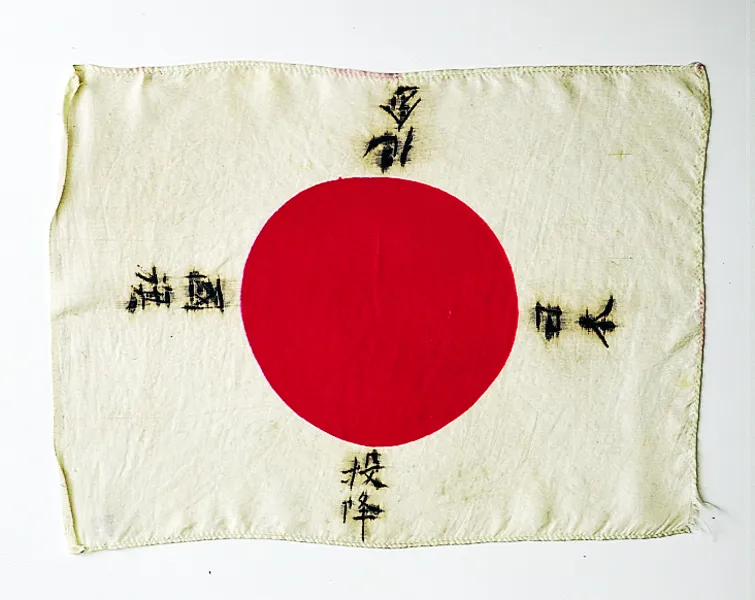
Photo: NPS photo, Public domain, via Wikimedia Commons
It started, as many internet moments do, with something that probably shouldn't have been that funny.
A Japanese Twitter user posted a joke that hinged on the word niku (肉), meaning meat, and the numbers 2 and 9 — which in Japanese can be read as ni and ku. February 9th is, therefore, Niku no Hi: Meat Day. Supermarkets run sales. People post pictures of steaks. It's completely absurd and somehow also completely logical, and when it made its way into English-language social media, people lost their minds.
Not because it was the funniest thing they'd ever seen. Because it revealed an entirely different architecture of humor — one built into the structure of the language itself.
Language as a Playground
Japanese is, genuinely, one of the most pun-friendly languages on the planet. This isn't a subjective cultural claim — it's structural. The language uses multiple writing systems (hiragana, katakana, and kanji), has a relatively limited set of phonetic sounds compared to English, and is full of homophones: words that sound identical but carry completely different meanings depending on context and kanji.
The result is a language where wordplay isn't just possible — it's practically inevitable. Japanese has an entire dedicated genre of puns called dajare, which occupy a cultural space roughly equivalent to dad jokes in the US: simultaneously beloved and groan-inducing, deployed by office workers and comedians and anime characters with equal enthusiasm.
But here's what makes this interesting from a digital content perspective: when Japanese wordplay gets exported through social media, it doesn't just translate as humor. It translates as revelation. English-speaking audiences aren't just laughing at a joke — they're having a small cognitive breakthrough about how language itself can work.
The Viral Anatomy of a Japanese Language Moment
Take the concept of 木漏れ日 (komorebi) — the word for sunlight filtering through leaves. There's no single English equivalent. When this gets posted on TikTok or Reddit, the response is always the same: thousands of comments from people who say some version of I've seen this my whole life and never had a word for it.
That's not just a language lesson. That's an emotional experience. The discovery that a feeling you've had but never named suddenly has a name — and that name belongs to another culture's language — is genuinely moving in a way that's hard to explain but very easy to share.
Creators have figured this out. There's an entire subgenre of content on TikTok and Instagram Reels built around untranslatable Japanese concepts: wabi-sabi (the beauty of imperfection), tsundoku (buying books and never reading them — relatable content for millions), kuidaore (eating yourself into financial ruin, which is apparently a Osaka cultural value and also extremely funny). These videos routinely hit millions of views, and the comment sections function as genuine community spaces where people discuss their own versions of these concepts across different cultural backgrounds.
The format works because it delivers novelty, emotional resonance, and a mild sense of intellectual superiority all in about 45 seconds. That's basically the perfect TikTok.
Creators Who've Made Language Their Brand
Some creators have built significant followings specifically by leaning into Japanese linguistic quirks as content.
Bilingual Japanese-American creators occupy a particularly interesting niche here. They can operate in both registers — explaining the Japanese to English speakers while also capturing the specific comedy that gets lost in direct translation. The humor of jikoshoukai (self-introduction) culture, the absurdity of keigo (formal Japanese honorifics) applied to modern situations, the way certain kanji combinations produce meanings that are either profound or completely ridiculous depending on how you read them — this material has proven consistently viral.
What's notable is that this content isn't being consumed purely as education. It's being consumed as entertainment, as identity content, and increasingly as a form of cultural aspiration. Young American audiences aren't just learning that Japanese has cool words. They're developing an aesthetic relationship with the language — following Japanese creators, picking up vocabulary from anime and gaming, using Japanese phrases in their own social media posts.
The language is becoming a style.
What This Says About Comedy in a Globalized Internet
For most of the 20th century, the dominant assumption about comedy was that it was culturally specific — that jokes didn't travel well across language and cultural barriers. Humor was considered one of the hardest things to translate, the first casualty of any international cultural exchange.
The internet has complicated that assumption pretty significantly.
What's happening with Japanese wordplay isn't that translation has gotten better. It's that the experience of encountering untranslatability has itself become the content. The gap between languages — the moment where you realize a concept exists in one language that simply has no equivalent in another — is funny and fascinating and shareable in a way that bypasses the usual barriers.
Gen Z, in particular, seems to have a high tolerance for and genuine interest in linguistic complexity. This is a generation that grew up code-switching across internet subcultures, developing fluency in meme languages, irony registers, and platform-specific communication styles. A Japanese pun that requires a brief explanation of kanji phonetics isn't a barrier — it's a feature. It's content that makes you feel like you learned something.
The Shift in What 'Universal' Actually Means
There's a bigger cultural argument embedded in all of this.
For decades, 'universal' in entertainment and media essentially meant 'legible to American audiences without much context.' Universal stories were stories that didn't require cultural knowledge to access. Universal humor was humor that didn't depend on linguistic specificity.
That definition is quietly being dismantled by the global internet, and Japanese language content is one of the clearest examples of the shift. The new universality isn't about flattening cultural difference — it's about making cultural difference itself the point of connection.
When a Japanese wordplay video goes viral, it's not because everyone understands the original joke. It's because everyone understands the experience of discovering that language can work in ways you never imagined. That experience — the small, delightful shock of a different cognitive architecture — is genuinely universal.
Japanese creators didn't set out to teach the world linguistics. They were just making jokes in their own language. But in doing so, they accidentally built one of the more effective cross-cultural bridges the internet has produced.
Which, honestly, is a pretty good pun on the whole concept of translation.