Things Nobody Tells You Before Working With a Japanese Creative Studio

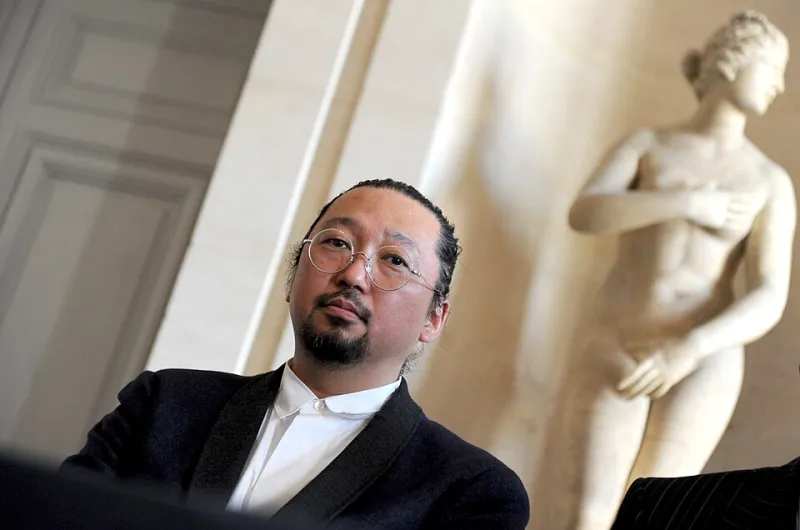
Photo: Gathering Co., Ltd., Public domain, via Wikimedia Commons
Let me set the scene. You've landed a collaboration with a Japanese animation studio, design house, or music production team. The emails are polite — almost too polite. The first meeting goes smoothly. Everyone smiles and nods. You walk out thinking everything's aligned.
Then the project starts, and something feels... off. Deadlines get interpreted differently. Feedback loops take longer than expected. The creative direction shifts in ways nobody explicitly discussed. And nobody seems willing to just say what's going wrong.
If any of that sounds familiar, you're not alone. And more importantly, you didn't do anything wrong — you just didn't have the map.
The Hierarchy Is the Foundation, Not a Formality
In most American creative studios, the org chart is loosely observed. Juniors pitch ideas directly to directors. Collaboration is horizontal, at least in theory. Titles exist but they're not always sacred.
Japanese studios work differently, and it's not arbitrary. The senpai-kōhai dynamic — roughly translated as the mentor-junior relationship — isn't just a social nicety. It's the actual mechanism through which skills, aesthetic sensibilities, and institutional knowledge get transferred. A junior animator at a studio like ufotable or a mid-tier manga production house isn't just learning technique. They're absorbing a philosophy of craft, one that was passed down from the generation before them.
This means that when a Western creative director tries to shortcut the hierarchy — say, by giving direct instructions to a junior artist without routing through their senior — it doesn't just feel rude. It can actually undermine the entire trust structure of the team. The senior loses face. The junior feels confused about who they're accountable to. The whole collaborative machinery stutters.
The fix isn't complicated, but it requires patience: always identify the key senior on a project and make that person your primary point of contact. Let them cascade direction downward in their own way.
Silence Is Not Agreement — It's Consideration
Western meeting culture tends to reward the person who speaks first, loudest, and most confidently. Silence in a brainstorm gets read as disengagement. But in Japanese creative environments, silence often signals the opposite — deep consideration, or sometimes a polite signal that something isn't sitting right.
The concept of ma — negative space, the pause — shows up everywhere in Japanese aesthetics, from graphic design to musical composition. It also shows up in communication. When a Japanese creative collaborator goes quiet after you pitch an idea, they may be processing. They may be crafting a diplomatic way to push back. Or they may genuinely be intrigued and thinking it through.
What they're almost certainly not doing is zoning out.
The practical takeaway? Slow your meeting cadence down. Build in more processing time. Follow up in writing after verbal discussions. And learn to read the subtle language of "that might be difficult" — which, in many Japanese professional contexts, is a soft no.
Collective Credit, Individual Craft
Here's something that genuinely surprises a lot of Western creatives: in many Japanese studios, individual attribution is downplayed even when individual contribution is enormous. The finished work belongs to the project, the team, the house. Personal branding — at least internally — can feel almost taboo.
This runs completely counter to how American creative culture operates, where building a personal portfolio and a distinct voice is practically a job requirement. Western designers, illustrators, and directors are trained to put their name on things.
Japanese studios often develop an identifiable collective aesthetic because individual voices are subsumed into a shared language. Think about the visual consistency of a Ghibli film, or the production design coherence of a Kyoto Animation series. That's not one genius at work — it's a highly tuned ensemble that has learned to speak with one voice.
For cross-cultural projects, this creates friction when Western collaborators want individual credit clauses in contracts or start promoting their contributions on social media before a project launches. Neither side is wrong, exactly — they're just operating from different assumptions about what creative work is.
Feedback Travels Sideways, Not Down
In American studios, critique tends to flow top-down. The director gives notes, the team executes revisions, the director approves. It's fairly linear.
In Japanese creative culture, critique is often more circular and indirect. A senior might express concern to a peer, who mentions it to a project lead, who gently suggests a revision in a way that doesn't single anyone out. This can look like inefficiency from the outside. From the inside, it's a system designed to preserve working relationships and keep egos intact — which, in a culture that values long-term collaboration, is genuinely smart.
If you're coming in as an outside collaborator and you need to give critical feedback, don't send a blunt email listing problems. Request a conversation, frame your concerns as questions, and give the team space to arrive at solutions themselves. You'll get better results, and you'll actually be welcomed back for the next project.
What Japanese Studio Culture Can Teach Western Creatives
None of this is meant to suggest that Western approaches are wrong or that Japanese studios are perfect — they have their own well-documented challenges, including brutal overwork cultures in certain corners of the animation industry. But there are things worth borrowing.
The long-view mentorship model produces genuinely deep craft. The emphasis on collective aesthetic coherence can elevate a project beyond what any single contributor could achieve alone. And the communication norms, frustrating as they can be to decode at first, are rooted in a genuine respect for relationships over transactions.
For any Western creator looking to build real bridges with Japanese studios — not just one-off licensing deals, but genuine creative partnerships — the investment in understanding these dynamics pays off faster than you'd expect. Learn a bit of the language, even just the professional vocabulary. Understand the hierarchy before you walk into the room. And when things go quiet, resist the urge to fill the silence.
Sometimes the best creative ideas live in that pause.