Broken on Purpose: How Japanese Creators Use Imperfection as Their Most Powerful Creative Tool
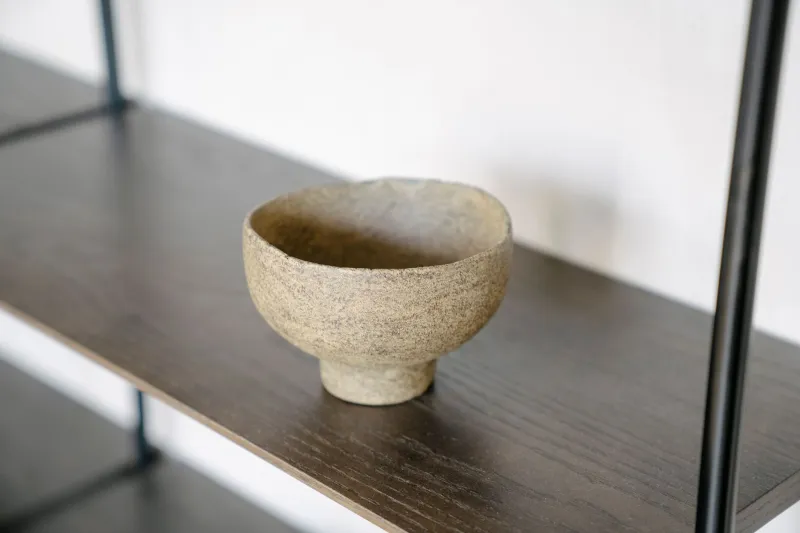
There's a moment in a lot of Japanese ceramics where you can see exactly where the potter's thumb pressed too hard. The clay dimpled. The glaze pooled unevenly. And somehow, that piece sells for three times what a perfectly symmetrical bowl would. If you're coming from a Western design background, that probably doesn't compute. But spend any time around Japanese creative culture — or around work like Kumatori Yusuke's — and you start to understand why the thumb print isn't a mistake. It's the whole point.
What Wabi-Sabi Actually Means (And What It Doesn't)
Wabi-sabi gets thrown around a lot in Western design circles, usually as a vague excuse to make something look rustic or aged. But the real concept runs a lot deeper than aesthetic texture. At its core, wabi-sabi is about finding beauty in transience and incompleteness — the idea that something is more honest, more emotionally true, because it carries evidence of time and effort and impermanence.
Paired with that is mono no aware, roughly translated as "the pathos of things" — a bittersweet awareness that everything fades. Japanese creators have been working with these ideas for centuries, but what's interesting right now is how powerfully they're landing with American audiences who've grown up drowning in hyper-polished content.
When everything is optimized, nothing feels real. And people are starting to feel that emptiness.
The Process Post That Outperformed the Final Reveal
Here's a pattern that keeps showing up across Japanese creative communities on social media: a creator shares a finished piece and gets solid engagement. Then they share a video of themselves making it — including the part where they messed up, reconsidered, scraped it down and started a section over — and that post does three to five times the numbers.
This isn't an accident, and it's not just the algorithm rewarding video content. It's audiences responding to evidence of struggle. There's something deeply reassuring about watching a skilled person encounter a problem and work through it. It makes the final result feel earned. It makes the creator feel human.
Japanese illustrators and craftspeople have been particularly good at this. Rather than hiding the revision process, they document it. Sketchbooks get posted. Half-finished linework gets shared. The version that didn't work gets talked about openly, sometimes more than the version that did.
Kumatori Yusuke's own approach to sharing work follows this logic — the evolution of an idea, the abandoned directions, the rougher early passes, all of it treated as part of the story rather than something to be cleaned up before anyone sees it.
Why American Audiences Are Especially Hungry for This
American content culture has spent years chasing a particular kind of aspirational perfection. The perfectly lit flat lay. The flawless brand rollout. The portfolio piece that looks like it emerged fully formed from a brilliant mind with zero friction. And while that content still performs, there's a growing fatigue with it — especially among younger audiences.
Gen Z in particular has developed a sharp sensitivity to what feels manufactured versus what feels genuine. They've grown up watching influencer culture get progressively more polished and progressively less trustworthy. So when a Japanese creator shows the smudge, the rework, the moment of uncertainty, it reads as authenticity in a way that a lot of Western creators struggle to manufacture.
The interesting thing is that Japanese creators aren't performing authenticity. They're operating from a cultural framework that genuinely values the mark of the hand, the evidence of time, the beauty in something that isn't quite finished. It's not a strategy. It's a worldview. And that difference comes through.
Kintsugi as a Creative Philosophy, Not Just a Visual Reference
Most people in design circles have at least heard of kintsugi — the Japanese practice of repairing broken pottery with gold, making the cracks a feature rather than a flaw. It gets referenced constantly as a metaphor, sometimes to the point of cliché. But the actual creative philosophy behind it is worth sitting with seriously.
Kintsugi says: the break happened. Pretending it didn't would make the object less honest. So instead of hiding the repair, you honor it. You make it visible. You let the history of damage become part of the object's identity.
Applied to creative work, this translates into something pretty radical by Western standards: don't hide the iterations. Don't pretend the first version was the good one. Show where things broke and how you put them back together. That history doesn't diminish the work — it deepens it.
Japanese creators working in digital illustration, textile design, and even commercial branding have started applying this thinking to how they present their work publicly. The before-and-after isn't framed as "look how far this came from its embarrassing early state" — it's framed as "look at the full arc of this thing becoming itself."
The Craft Mark as Signature
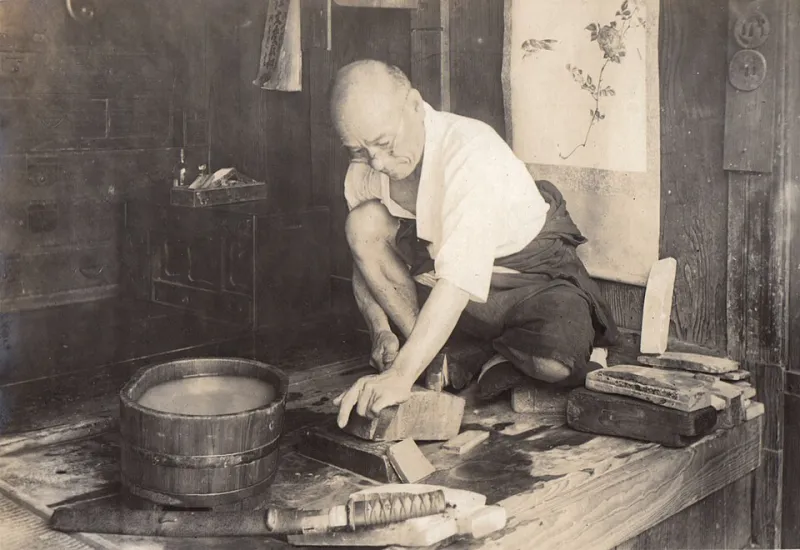
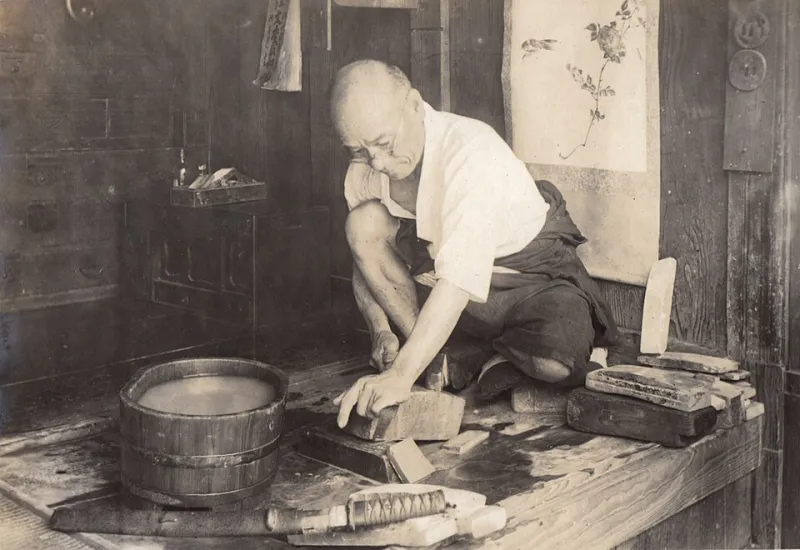
There's another dimension to this worth calling out: in Japanese craft traditions, the visible mark of the maker isn't incidental. It's often the thing that makes a piece valuable. The brushstroke that shows pressure variation. The woodblock print with a slight ink bleed at the edge. The textile where you can see the warp threads shifting.
These aren't quality control failures. They're proof of a human hand. And in an era where AI-generated imagery is becoming increasingly indistinguishable from human-made work, that proof carries more weight than it ever has.
Japanese creators who've built significant followings in the US market tend to be the ones who've leaned into this rather than chasing the clean, digital-native aesthetic that dominates a lot of Western creative content. Their work looks made. It has texture, weight, evidence of decision-making. And audiences who've spent years consuming frictionless content respond to it like they're finally tasting something with actual flavor.
Imperfect Doesn't Mean Careless
One thing worth being clear about: none of this is an argument for sloppiness. The Japanese creative tradition that values imperfection is also one of the most technically demanding in the world. The wabi-sabi aesthetic isn't achieved by not trying — it's achieved by trying so hard and knowing your craft so deeply that you can choose where to let the work breathe.
That's a crucial distinction. The visible thumb print on the bowl only works because everything else about the bowl is considered. The asymmetry in a piece of Japanese graphic design only lands because the underlying composition is rigorous. The imperfection is intentional, which means it requires more skill than perfection, not less.
What Japanese creators have figured out — and what Kumatori Yusuke's work reflects — is that audiences can feel the difference between a flaw that happened because someone didn't care and a flaw that was allowed because someone cared enough to know when to stop. One feels like a mistake. The other feels like trust.
And right now, trust is the rarest thing in creative work.