Never Finished, Always Better: How Kumatori's Revision-First Mindset Is Quietly Changing American Studios

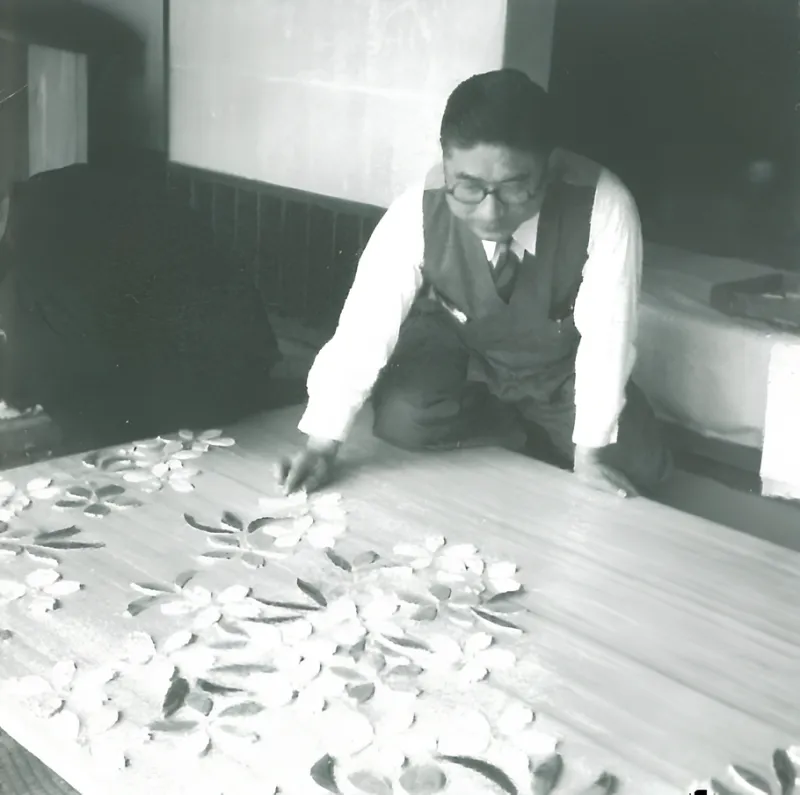
Photo: Japanese artist carefully revising detailed illustration at desk, via www.advantour.com
There's a phrase that gets thrown around a lot in American startup and creative culture: ship it. Get the thing out the door. Iterate in public. Done is better than perfect. It's practically gospel at this point, printed on motivational posters in open-plan offices from San Francisco to Austin.
Kumatori Yusuke doesn't buy it.
Not in a loud, contrarian way. He's not writing manifestos or going on podcasts to argue the point. It's quieter than that—and honestly, more effective. His process speaks for itself, and lately, a growing number of American creators and studio leads are starting to listen.
The Problem With "Done"
Here's the thing about shipping fast: it works great for software updates and social media posts. But for creative work that's supposed to carry emotional weight, cultural meaning, or long-term resonance? The "move fast" model has some serious cracks in it.
Kumatori's approach sits at the opposite end of that spectrum. His workflow is built around continuous refinement—not as a delay tactic, but as a genuine creative philosophy. The idea is that a first version is essentially a hypothesis. It exists to be questioned, reworked, and deepened. Novelty is cheap. Depth takes time.
This isn't a new idea in Japanese creative culture. From the meticulous revision cycles of manga artists to the multi-year development arcs at studios like Ghibli, the tradition of treating creative work as something that earns its final form runs deep. What Kumatori does is translate that tradition into a working methodology that's legible to Western collaborators—and that translation is where things get interesting.
What "Iteration" Actually Means Here
When American studios talk about iteration, they usually mean: release version one, collect feedback, patch the obvious problems, move on. The timeline is tight. The goal is momentum.
Kumatori's version of iteration looks different. Revision isn't a response to external feedback—it's baked into the process from the start. Before anything goes out into the world, a piece of work has already been through multiple internal evolutions. The question isn't what do users think? It's what does this work actually want to be?
That distinction matters more than it sounds. One approach treats the audience as the quality filter. The other treats the creator's own critical eye as the first and most rigorous standard. Both have value, obviously—but the second one tends to produce work that feels more intentional, more layered, and more durable.
Studio directors in LA who've worked adjacent to Kumatori's projects have noted that his deliverables tend to arrive with a kind of internal coherence that's hard to manufacture through rapid iteration. Things fit together. Choices feel considered. There's less of that slightly-unfinished quality that plagues work rushed to market.
The Influence Is Spreading
It's not like American studios are abandoning their production timelines overnight. That would be chaotic and, frankly, financially impossible for most. But what's shifting is the conversation around what creative completion means.
A new generation of American designers, illustrators, and content creators—many of whom have been following Kumatori's work and engaging with Japanese creative culture more broadly—are starting to build longer refinement windows into their own workflows. They're asking harder questions before hitting publish. They're treating a first draft as a starting point rather than a near-final product.
Some of this is reaction to burnout. The content churn of the last decade has left a lot of creators feeling like they're running on a treadmill. But some of it is genuine philosophical recalibration. The Kumatori approach offers an alternative model: what if the goal wasn't output volume, but output weight?
Depth Over Novelty, Every Time
One of the more counterintuitive aspects of Kumatori's process is that it actually produces more engagement, not less—even though it produces fewer pieces of work. The reason is pretty simple once you see it: depth creates conversation.
Work that has been genuinely refined carries more surface area for interpretation. There's more to discover in it. Audiences return to it. They argue about it. They find new things on a second or third look. That's the kind of cultural lifespan that no amount of rapid-fire content can replicate.
American brands and studios spend enormous amounts of money trying to manufacture that kind of staying power. Kumatori's argument—implicit, never quite stated outright—is that you can't manufacture it. You have to build it in from the beginning, one revision at a time.
What This Looks Like in Practice
So what does a revision-first workflow actually look like day to day? From what's observable in Kumatori's output and process, a few things stand out.
First, early versions stay private longer. There's no soft launch, no "rough cut" shared with a wide group for gut-check feedback. The work develops in a more protected space before it meets an audience.
Second, revision is treated as creative work, not corrective work. The difference in mindset is significant. Corrective revision is about fixing problems. Creative revision is about discovering what the piece is actually trying to say—and then making it say that more clearly.
Third, there's a high tolerance for throwing things out. Not every revision builds on the last one. Sometimes a direction gets abandoned entirely because it wasn't the right direction. That kind of decisive editing is harder than it sounds, especially when time and resources have already gone into a version.
The Takeaway for American Creators
Nobody's saying you need to spend years on every project. That's not the point, and it's not realistic for most working creatives in the US market. But there's something genuinely worth borrowing from the Kumatori approach: the idea that "done" is a quality threshold, not a deadline.
The next time you're tempted to ship because the calendar says it's time, it might be worth asking one more question. Not is this finished? but is this what it was trying to be?
That's a harder question. It takes longer to answer. And the work that comes out on the other side of it tends to be considerably better.
That's the Kumatori effect, more or less. Not a revolution. Just a quieter, more demanding standard—and one that's slowly, steadily making its mark on how American studios think about the creative process.