Fast, Precise, Relentless: The Creative Discipline Behind Japan's Best Work
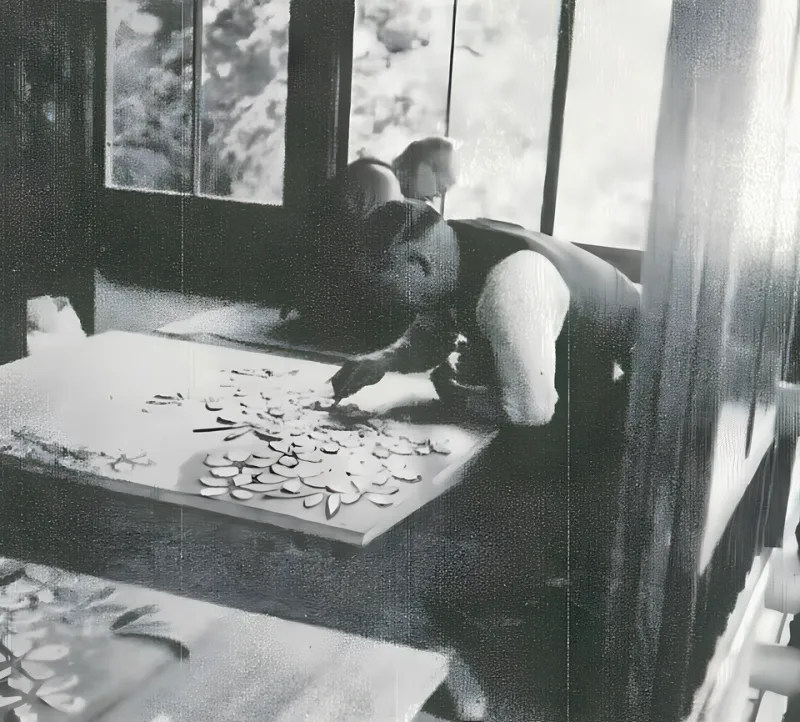
Photo: Rosanjin, Public domain, via Wikimedia Commons
There's a moment in almost every collaboration between a Western creative team and a Japanese studio where someone on the American side asks, quietly and a little bewildered: how are they doing this so fast?
The work is meticulous. The frames are clean. The typography is considered. And yet the turnaround is somehow... reasonable? Sometimes even ahead of schedule?
This isn't magic. It's method. And once you understand the underlying philosophy, it changes how you think about your own creative process.
The Myth of the Tortured Perfectionist
Western culture has a specific image of the Japanese craftsperson: the sushi chef who trains for a decade before touching a fish, the ceramicist who throws out 200 bowls before keeping one. That image isn't wrong, exactly — but it's incomplete.
What gets left out is the system built around that precision. Japanese creative professionals — whether they're animators at a mid-sized studio in Osaka, motion designers in Shibuya, or independent illustrators working out of a Kyoto apartment — tend to operate within highly structured personal frameworks. Deadlines aren't treated as the enemy of quality. They're treated as part of the creative constraint that produces quality.
This is a fundamentally different relationship with time than what most American creative professionals are taught.
Front-Loading the Hard Decisions
One of the most practical things I've noticed working in and around Japanese creative circles is how much energy goes into the pre-production phase. Before a single frame is animated or a single layout is designed, the conceptual work is done — thoroughly, sometimes painstakingly.
In American production pipelines, especially in digital and advertising work, there's often a culture of "we'll figure it out in post" or iterating heavily mid-project. That flexibility feels like freedom, but it often creates downstream chaos: revision spirals, scope creep, and the kind of exhausting back-and-forth that burns out teams.
Japanese studios tend to resolve ambiguity early. The brief gets interrogated. The visual direction gets locked. The emotional tone of the piece gets agreed upon before production starts. Once those pillars are in place, execution can move fast — because everyone already knows where they're going.
The lesson here isn't that you need to spend three months in pre-production for every project. It's that the quality of your setup determines the speed of your execution.
Kaizen Isn't Just a Business Buzzword
You've probably heard the term kaizen — the Japanese concept of continuous, incremental improvement. It gets thrown around a lot in Silicon Valley productivity content, usually stripped of its original context.
But in creative practice, kaizen looks like this: instead of waiting for a project to be "done" to evaluate what went wrong, you build micro-reflection into the process itself. After each phase. After each deliverable. Not a formal post-mortem — just a brief, honest check-in. What worked? What slowed us down? What would we do differently?
This creates a compounding effect. Each project makes the next one slightly more efficient, slightly more refined. Over time, that's the difference between a studio that produces good work occasionally and one that produces great work consistently.
Speed Isn't the Opposite of Care
Here's the reframe that matters most: speed-to-market and careful craft are only opposites if you treat quality as something you add at the end.
In the Japanese creative philosophy I've observed and tried to practice myself, quality is baked into every micro-decision along the way. The color palette is chosen deliberately on day one, not adjusted in the final hour. The pacing of an animation is felt in the storyboard, not discovered in the edit. The hierarchy of a layout is resolved in the sketch, not the comp.
When quality is distributed across the process rather than concentrated at the end, you don't need to slow down to achieve it. It's already there.
What American Teams Can Actually Do With This
Okay, so what's the practical takeaway? A few things worth trying:
Invest in your brief. Spend twice as long as you think you need to on alignment before production begins. Ask uncomfortable questions early. Define what "done" looks like in specific, visual terms.
Create personal checklists, not just project checklists. Japanese designers often have deeply personal quality standards they apply to their own work — independent of client feedback. Develop yours. What are the non-negotiables in your craft?
Shorten your feedback loops. Don't wait until a major milestone to check in with yourself or your team. Small, frequent calibrations keep the work on track and reduce the cost of course-correcting.
Respect the constraint. A deadline isn't an obstacle to good work. It's a parameter that shapes the work. Treat it that way.
None of this requires you to move to Tokyo or apprentice under a master for a decade. It requires a shift in how you think about the relationship between discipline and creativity — and a willingness to build better habits into the work you're already doing.
The best Japanese creatives aren't slower than everyone else. They're just more intentional about where they spend their time. That's a skill. And skills can be learned.