Slow Down to Speed Up: The Paradox at the Heart of Japanese Creative Work
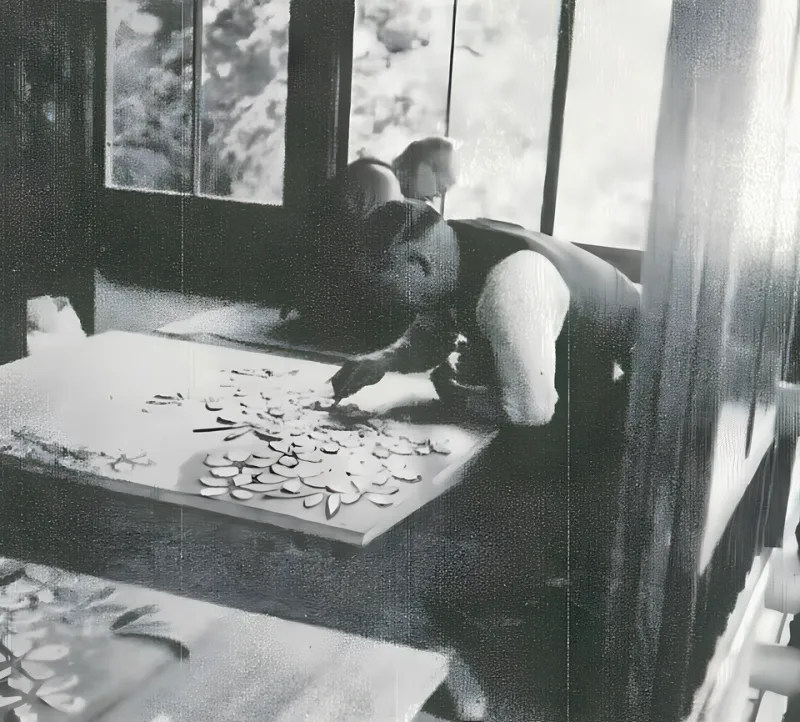
Photo: Rosanjin, Public domain, via Wikimedia Commons
There's a moment in almost every conversation I have with Western designers or art directors where their eyes go a little wide. It usually happens when I describe a typical project cycle at a mid-sized Tokyo creative studio — the level of pre-production refinement, the internal review loops, the obsessive iteration before a single asset goes to a client. Then I tell them the turnaround time. The silence that follows says everything.
The assumption in most US creative environments is that quality and speed exist on opposite ends of a dial. You can crank one up, but the other has to come down. Japanese creative culture — at least the version I've spent years working inside and studying — operates on a fundamentally different premise. Precision and pace aren't opposites. They're collaborators.
The Setup Phase Is the Work
If you've ever watched a Japanese craftsperson prepare their workspace before starting — whether they're a sushi chef, a ceramicist, or a motion graphics artist — you'll notice something that can read as almost excessive to outside observers. The arrangement. The checking. The stillness before movement.
This isn't ceremony for ceremony's sake. It's a deliberate cognitive strategy.
Takahiro Nishimura, a creative director at a Shibuya-based branding agency I spoke with last spring, put it plainly: "The decisions that slow you down in production are almost always decisions you should have made in setup. We spend maybe forty percent of a project timeline before we touch a single deliverable. Americans think we're being slow. We think we're being fast."
What he's describing is essentially a front-loaded workflow — one where ambiguity gets resolved early and aggressively, so that execution becomes almost mechanical. When you know precisely what you're making and why, making it stops being a guessing game.
For Western creatives used to "jumping in" and iterating toward clarity, this can feel uncomfortable. But the math tends to work out. Fewer mid-project pivots. Fewer rounds of client revision. Fewer late nights fixing decisions that should never have been made in the first place.
Perfectionism as a Filtering System, Not a Paralysis Trigger
Here's where things get psychologically interesting. Perfectionism in the American creative context is often treated as a liability — something to manage, medicate, or therapy your way through. In Japanese creative culture, it's treated more like a tool. One that needs to be calibrated, not eliminated.
The distinction matters. Uncalibrated perfectionism is what makes someone spend six hours adjusting kerning on a deck that needed to ship yesterday. Calibrated perfectionism is what makes someone spend six hours on the one typographic decision that will define an entire brand system — and then move quickly on everything else.
Mieko Hayashi, a freelance illustrator whose client list spans Tokyo, New York, and Seoul, described it to me as knowing "where the soul of the project lives." Her approach: identify the two or three elements that carry the most meaning, apply maximum care there, and hold everything else to a high-but-not-obsessive standard. "You can't treat every pixel like it's equally important," she said. "That's not perfectionism. That's anxiety."
This distinction — between meaningful precision and anxious over-attention — is one of the most practically useful things I've encountered in years of observing Japanese creative process. It's also one of the hardest to teach, because it requires a level of self-awareness about where your own craft actually lives.
The Role of Shared Language
One structural advantage Japanese creative teams have that often goes unacknowledged: a deeply shared aesthetic vocabulary. When a creative director says something "feels too heavy" or "needs more air," the team around them generally knows what that means without a lengthy explanation. This shared language compresses feedback loops dramatically.
In American studios, especially ones built from diverse backgrounds and influences, that shared vocabulary often has to be constructed from scratch on every project. That's not necessarily a bad thing — diversity of reference creates genuinely interesting work — but it does add time and friction that Japanese teams don't always have to account for.
The lesson here for US creatives isn't to artificially homogenize their teams. It's to invest in building shared language deliberately. Reference libraries, mood board rituals, even just regular conversations about what the team finds beautiful or effective — these things compound over time into a communication shorthand that speeds everything up.
Ritual as Infrastructure
Something I've noticed across multiple Japanese creative environments, from small indie studios to larger production houses: there's an almost architectural quality to how routines are structured. Morning rituals, end-of-day reviews, specific ways of opening and closing a project phase. These aren't quirks. They're infrastructure.
The psychological research on this is pretty solid. Routines reduce decision fatigue. When the small stuff runs on autopilot, cognitive resources get freed up for the work that actually requires creative judgment. Japanese creative culture has essentially been running this experiment for generations without necessarily framing it in those terms.
For American freelancers and studio teams alike, the takeaway is actionable: design your workflow the way you'd design a product. What decisions can be standardized? What rituals signal to your brain that it's time to produce? What end-of-day habit tells your nervous system that the work is done for now?
What "Fast" Actually Means
I want to push back on one framing before wrapping up. When we talk about Japanese creatives being "fast," we're not usually talking about raw output speed — the number of assets produced per hour, or how quickly a draft gets turned around. We're talking about something more like velocity toward a finished thing that works.
That's a meaningful distinction. A team that ships three mediocre concepts in a week and then spends two weeks revising isn't moving faster than a team that takes a week to develop one concept that lands. The first team just feels faster at the start.
The Japanese creative approach, at its best, is optimizing for the second kind of speed. The kind that looks slower in the early stages and then suddenly, almost mysteriously, arrives at quality before anyone expected it.
That's the paradox. And once you see it, you can't really unsee it.